

Sci-Fi Stories - #6 Two Forests
Signal #6 Signal: “Any process of scalability will bring new problems and challenges.” Writer: Damien Lutz


The 3D printer dinged as its door slid open to reveal juicy replicants of orange pieces sitting in a perfectly arranged circle on a porcelain plate.
Mia took the plate and sat down to snack on the synthetic fruit as she gazed out the dusty window at the swarms of drones gliding like birds around the city’s towers. As the city spread out before her and twinkled in the morning light, she liked to think of it as a giant, human-made forest, a testament to human achievement and resilience, towering like the giant trees and forests from which humanity had emerged.
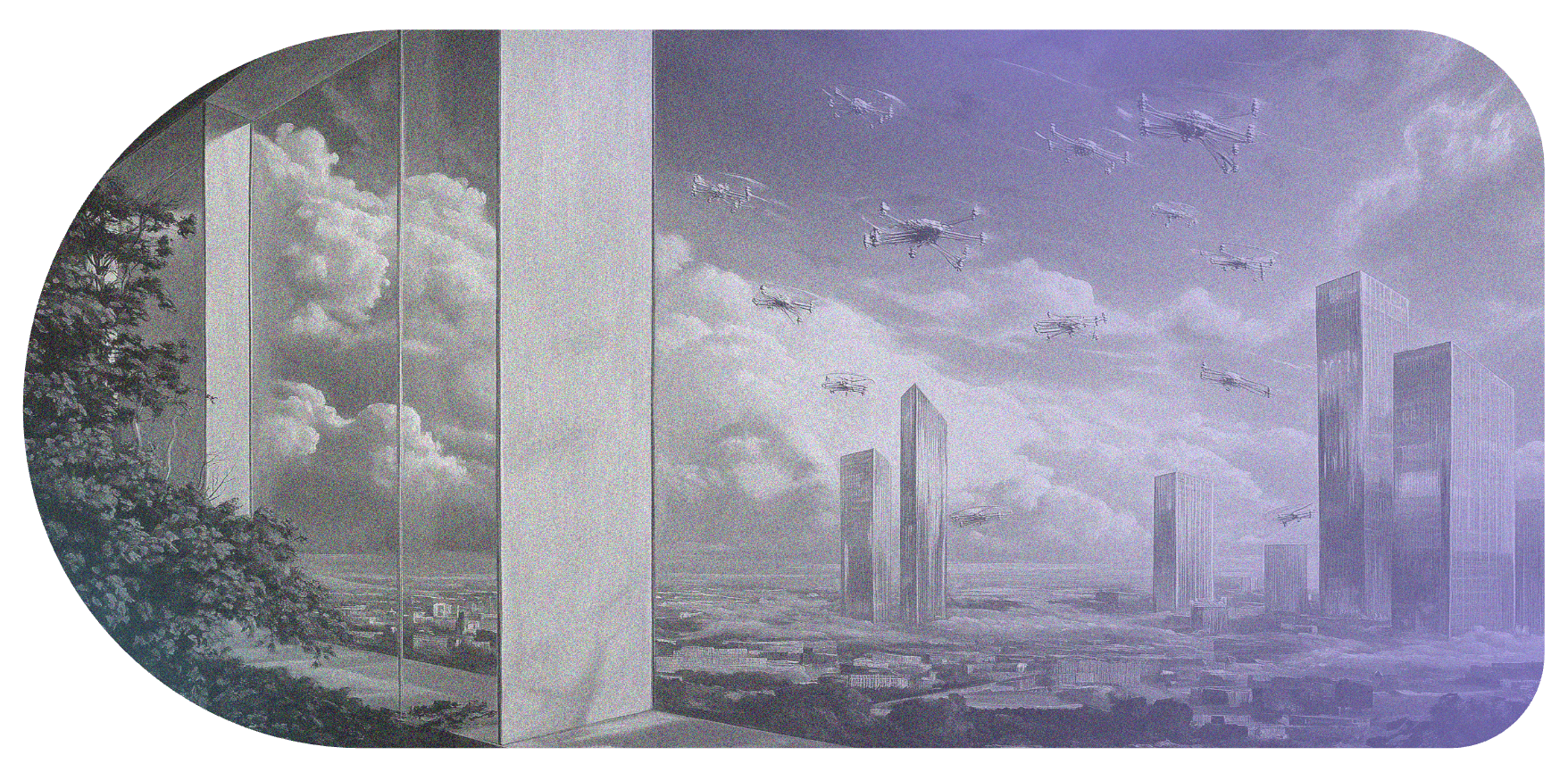
(View from the window)
A narrow gap between two towers gave Mia a glimpse of the distance forests which always reminded her of her brother and how they had both chosen such different paths.
She fully understood Ben’s belief in the benefits of agroforestry, biomimicry, crop rotation, and communities living interdependently and trading. Those old ways gave people some control over their immediate area and needs. But they were so slow and primitive, while more and more people around the world struggled for food and nutrition. As a synthetic biologist, Mia believed in her heart the world needed the speed and scalability of technological solutions. Research as early as 2010 had warned the world that by 2035 traditional food supply chains would struggle to meet the nutritional demands of the global population. The following decades of ongoing wars in Europe and the Middle East, however, not only made food shortages worse by 2040, but they also further disrupted supply chains and the innovation needed to properly grasp and address the looming global crisis.
At that time, as a young and junior food synthesist, Mia had almost given up on her career after being forced to constantly switch employers as start-ups launched and failed, held back throughout the two decades it took synthetic food technology to not only be properly developed, but for the food to also be adopted whole-heartedly by the public. By the late 2050s, however, the technology had become safer, faster, and more affordable, with many developed countries shifting to synthetic foods as the main source of nutrition—and putting Mia and her skills in high demand for the rest of her life.
Although Ben’s tribe had forsaken personal devices, which meant keeping in contact with him was difficult, Mia could always check the Earth’s Digital Twin map and find an aerial view of Ben to check if he was alive and okay. Even though he was now 47 years old, he would always be her little brother.
Tempted to check the map then, her wrist wearable interrupted her thoughts with a pulsing reminder that she needed to leave to catch the train to be on time for work.
She headed on her way, the images of Ben and the forests fading from her mind as her thoughts turned to the latest challenge with synthetic foods awaiting her in the NutriCorp laboratories.
Along with nutrition and taste balancing issues, the synthetic fruit and vegetable industry, once hailed as the saviour of global food security, was facing pushback from environmental groups and consumers concerned about unforeseen ecological impacts and health issues.
Arriving at NutirCorp, Mia descended into the depths of the sterile environment of the food synthesis facility. She passed rows upon rows of stainless-steel vats, each one bubbling and churning with the raw ingredients of tomorrow’s meals.
“Good morning, Mia,” said Tai, her assistant, as she entered the lab.
“Good morning, Tai. I hope you slept well—today might be a long one. We’re still struggling to perfect the combination of vitamins and minerals of synthetic fruits whilst maintaining taste quality. I want to achieve a solution today.”
As Mia delved into her work, the glimpse of the sprawling forest canopies returned to her thoughts, along with the nagging doubts that had been growing within her.
While the synthetic vats churned away, consuming vast amounts of energy and resources, she couldn’t help but wonder about the long-term impact on the planet from the mass-production of synthetic food. It was meant to address food insecurity, and reduce the impacts of traditional agriculture such as soil degradation, water pollution, greenhouse gas emissions, and loss of biodiversity. But while they had reduced the sprawl of farmlands, companies like NutriCorp had needed to aquire their own wide use of land for their factories.
After hours of meticulous analysis, Mia and Tai pinpointed a flaw in their genetic coding of synthetic fruits used to enhance the protein yield.
“We’ll need to re-engineer this sequence,” Mia said. “And we’ll have to run a full battery of tests to ensure stability.”
With Tai continuing work in the lab, Mia headed to the meeting with the environmental impact committee.
She entered a room filled with scientists, environmentalists, and corporate representatives. Holographic charts displayed data on everything from greenhouse gas emissions to water usage, as the head of the committee shared their updates.
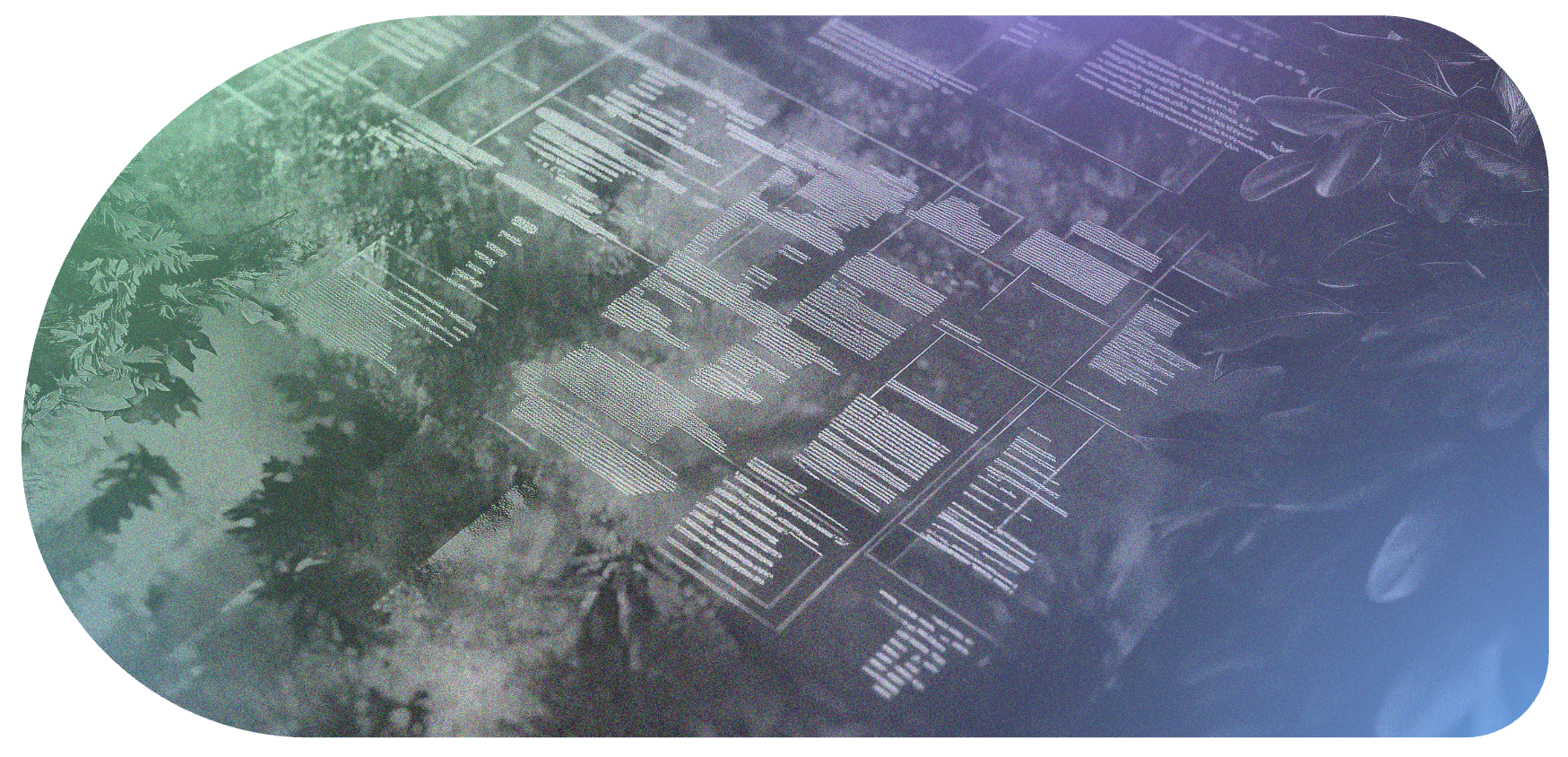
(Glimpse of the holographic info)
“Our factory’s impacts on soil fertility, carbon sequestering, and water conservation are all still under great scrutiny. We’ve been investigating alternatives to minimise our impact. It’s a priority for us, but finding a scalable solution is proving challenging.”
The discussion shifted to the socio-economic impacts of synthetic foods. While they had reduced pressure on traditional agriculture, small producers were struggling to compete, and there were reports of nutrient imbalances and potential new allergies in populations relying heavily on these new food sources.
As she walked back to her lab, Mia felt the weight of responsibility pressing down on her— the complexities of real-world implementation were testing the promise of a mass scale synthetic food production.
She paused by the tall windows of the hallway to calm herself and gaze into the city forest she thought would save the world. Thoughts of her brother surviving in the outer forests returned and brought with them a renewed perspective.
While scalable solutions were essential, Mia could see that the future of food couldn’t rely on just the sterile confines of corporate laboratories, but also in the hands of those who remained directly connected to nature.
As the sun dipped below the horizon and the city lights shimmered in the gathering darkness, Mia completed her tasks for the day and made her way home through the neon-lit streets.
Reaching her apartment, she looked out over the city and peered through the gap in the towers where the outer forests remained hidden by the night.
She activated the Earth’s Digital Twin and a holographic globe appeared in front of her. She brushed it sideways and then pinched it to zoom in on the forested area just outside the city. The live data switched to night mode to reveal the subtle colour arrays of the canopies. She zoomed in on the area of her brother’s tribe to see small fires flickering in between large communal huts in a clearing.
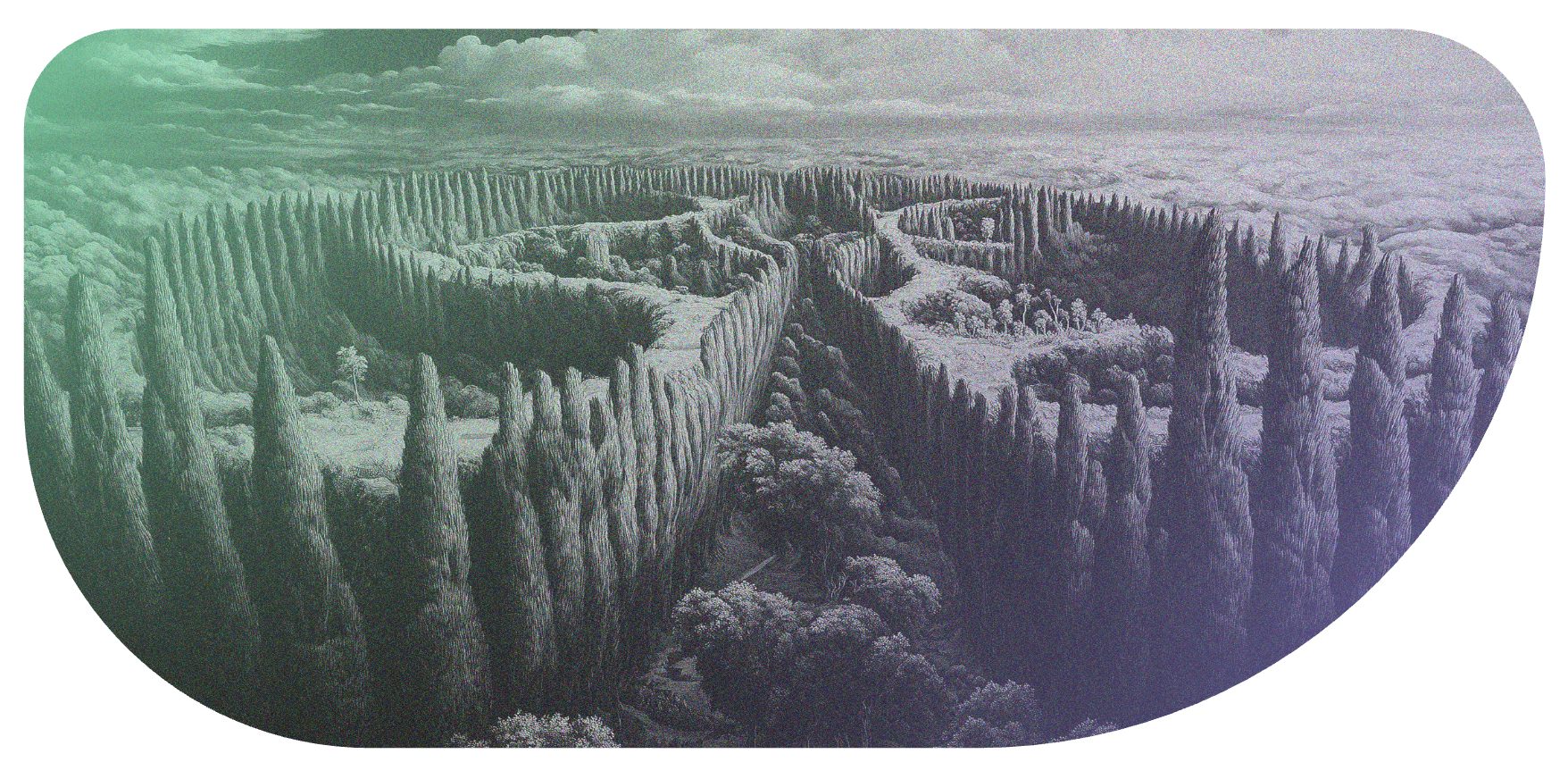
(Designed Forests Areas)
And there she found her brother, wiping sweat from his brow as he carried the last of his day’s haul—a basket of bright oranges plucked ripened from the trees he lived in.
Sci-Fi Stories is a collection of sci-fi texts by Damien Lutz based on prompts from real-life research. Each text contains serious clues regarding future food innovations that represent research paths taken by the Transformative Times team. Current research focuses on how to accelerate the adoption of new food habits.
About us
Transformative Times is a research platform for different companies and organizations to work together towards new futures. Find more about what we are doing by reaching out to us or following us on LinkedIn and Instagram.
https://transformative-times.com/
 | A guest post by
|