

Sci-Fi Stories - #10 Wello
Signal #10: “Trust plays a big role on adopting new foods.” Writer: Damien Lutz


Desperate to solve her Irritable Bowel Syndrome (IBS), Emma had visited multiple doctors, endured countless diets, detoxes, medications and invasive examinations, meditation for stress management, and a host of other approaches—all to no avail.
Her symptoms were at times debilitating. She felt ‘in her stomach’ that she needed a very personalised treatment.
So, when smart food technology emerged—with embedded sensors providing real-time data on food interacting with the consumer’s gut biome—she didn’t hesitate to try it. With the bonus of seeing live technical data translated into something she could understand, as it was happening inside her, Emma felt excited to be able to gain some control over her health. She subscribed immediately to the weekly deliveries to start meticulously tracking every bite and sip that went into her body.
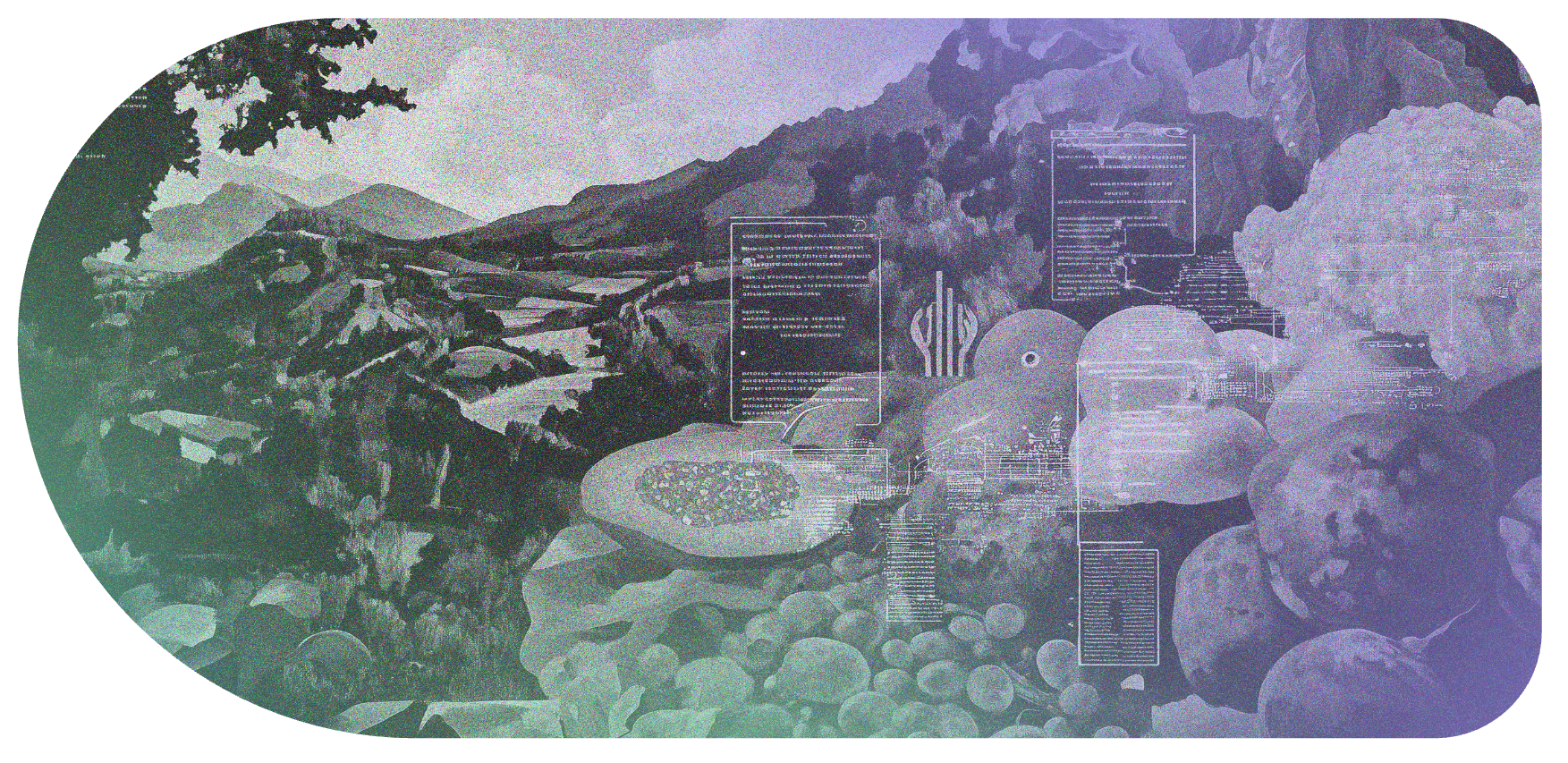
(Company Poster of the New Technology)
“But is it safe?” asked her good friend Alex via text late one night.
Emma paused, realising she hadn’t looked deeply into the safety aspects of the technology. She had assumed that since it had been released commercially, it had been approved by the appropriate regulatory bodies.
“Yeah, of course, it’s all regulated.”
“Ok, well good luck, Ems. Sounds like it’s your best hope so far. Let me know how goes. Night! xx”
Realising Alex was right—that she should be more diligent about what she allowed into her body—Emma reviewed the safety information in more detail. The website showed a lot of badges and seals of different types of health and safety standard assurances. She couldn’t see any reason not to feel secure using the technology.
On receiving her first batch of smart foods, Emma set about adapting her routine to eating only the smart foods, so she could track everything she consumed. After a lot of determination and commitment to the lifestyle changes, the first two weeks went well, and Emma started to pinpoint certain foods, ingredients, and combinations that were aggravating her gut biome. She also learnt how to optimise her digestive health, nutrition intake, and overall well-being.
“I’m so happy for you, Ems,” said Alex as they sat down to lunch at a busy city cafe.
“Hey,” greeted a waiter appearing at their table. “What can I get you folks?”
“I’ll have the salmon thanks”, said Alex.
“Do you have any smart foods?” asked Emma.
The waiter’s face grimaced. “What do you mean?”
“It’s ok,” Emma replied, sighing. “Nothing for me, thanks.”
As the waiter walked away, Emma took a smart snack bar from her bag.
“Ems, your diet seems really restrictive.”
“I’m sorry, I don’t mean to be a pain. But you know how bad this is for me. I need to track everything I consume. And not every café, restaurant, or food outlet offer smart foods yet. It’s like years ago when asking for vegetarian options was an inconvenience or just impossible. So, in the meantime, I’ve just got to manage this my way.”
“Hey, wait,” said Alex, perking up and swiping through her smart-watch. “I saw something… here it is.”
Alex flicked a finger across her watch screen to share the content with Emma—an advert for a new smart food tablet called Wello, ‘A revolutionary tablet that simplifies nutrition management for people on the go’.
Emma’s eyes lit up. Embedded with the same micro-sensors as smart food, Wello tablets could be taken with any non-smart foods to seamlessly integrate nutrition tracking into her daily routine.
“Alex, this is perfect. I can still use my smart foods at home, and then use Wello when I want to eat out. Thank you!”
Emma started searching for the Wello subscription form.
“Just check the safety stuff first, yeah?” Alex winked, knowing her friend better than Emma realised.
“Yeah, yeah, of course!”
(Interior of the City Cafe)
The next morning, Emma received her first box of Wello, and she decided to test it by eating breakfast from her local cafe.
After opting for the full personalisation experience by connecting all her health records to the Wello app and agreeing to all the necessary tracking, she swallowed her first Wello tablet and began her breakfast. A notification pinged on her watch and Wello’s cheerful avatar popped up.
“Good morning, Emma! Your breakfast contains 15 grams of protein, 10 grams of fibre, and all essential vitamins for the day. There a 3 potential aggravators.”
She checked that the aggravators weren’t food chemicals she knew were problems for her, but the app had already done that, too. She watched Wello’s animated real-time illustration of her gut flora confirm no irregularities were appearing that could evolve into physical symptoms.
Emma smiled, satisfied with her first experience with Wello.
After another week, Wello gave Emma the confidence to eat out more, knowing that while she was still at risk of eating something not good for her, she could monitor everything and continue to improve her eating choices and gut health.
The next few weeks proceeded as usual. She navigated through her busy work schedule, the only interruptions being the occasional notification from Wello, updating her about any aggravators, alternatives, and other health information such as her hydration and caloric intake. Day by day, she felt increasingly confident about her health and the management of her IBS.
“So, Ems, how’s Wello going?” asked Alex as they sat down to lunch at their usual catch-up cafe.
Emma smiled and popped a Wello into her mouth. “Today, I’m having the salmon.”
“Yay”, exclaimed Alex. “It’s so good to see you just enjoy eating out.”
That evening, as Emma relaxed with a book, her watch startled her with a sudden and insistent buzzing, and the screen lit up red.
“Alert: Data Breach Detected. Please discontinue use of Wello immediately.”
Emma’s heart skipped a beat.
What kind of breach? How serious is this?
But there was very little detail from the alert, just a promise of more information to follow in the morning.
Waking up groggy after a restless, worrisome night, Emma checked her watch and was swamped with information—every major news outlet was reporting on the breach. Wello had issued a statement acknowledging that a hacker had accessed their network and obtained user data. Wello assured the public they were working to secure their systems and mitigate damage.
What damage? What the hell?
Emma’s phone rang. It was Alex, concern evident in her voice. “Ems, are you okay?”
“I think so,” Emma replied, her voice shaking. “I just don’t know how this affects me yet.”
“How much personal data did you share with it?”
Emma’s mind flashed back to when she had hurriedly shared her medical and tracking data with the Wello app in her excitement to test the tablet.
“Ah… what do you mean?”
“Haven’t you seen the news?” Alex continued. “The hacker is already selling everyone’s personal medical and other private data on the black market. I’m just reading this… it’s people’s health metrics, dietary habits, but it’s also purchasing habits, travel routines and locations… everything and anything you shared. Reports are saying that by accepting the full personalisation, users may have shared a lot more data with the Wello app then they realised.”
Emma’s heart dropped. She felt stupid, but she also felt violated.
She thanked Alex and called Wello directly, but she was diverted to a message bank promising to call her back when possible.
She cancelled her Wello subscription and threw out her remaining smart food. She couldn’t trust any of it, not now.
Over the next few days, Emma began receiving spam calls offering her deals on anything from targeted health supplements to holiday travel deals, and adverts pinged her watch that seemed eerily specific to her real-time location. She felt watched, and panic set in.
Despite an ongoing police investigation, the hacker revealed more intimate details, details that could only come from the comprehensive data that Wello had collected. Emma’s watch and personal devices were bombarded more and more with messages, each more invasive than the last.
Amid the chaos, Emma’s fear twisted into anger, which only made her stress levels soar, and her IBS flared up again, making every day a struggle.
Barraged with lawsuits for an extreme lack of data transparency and privacy protection, Wello went into bankruptcy. The angry public avoided smart foods entirely, and the entire industry quickly went into hibernation to reassess its risks and responsibilities.
Fed up with feeling so powerless, Emma pulled hard on the hand break of the whole ordeal, clamed herself down, and reflected on what she could control.
She had learnt a lot about her relationship with her body and her gut biome from her short experience with smart food technology. She decided to put that to use in her daily routine, and while scars of the privacy violation lingered, her relationship with her body and health was better than it had ever been.
“How you doing, Ems?” asked Alex via text one morning.
“I’m ok now. I actually learnt a lot about my body and health, and I’m feeling more in control than before I started using smart foods and Wello. So, maybe there was some good from it all.”
“That’s awesome. Hey, I hear a new smart food is coming out, much more secure than Wello. It says here that they have—”
“No thanks,” Emma interjected. “There’s no way I’m ever putting any smart food into my body ever again.”
Sci-Fi Stories is a collection of sci-fi texts by Damien Lutz based on prompts from real-life research. Each text contains serious clues regarding future food innovations that represent research paths taken by the Transformative Times team. Current research focuses on how to accelerate the adoption of new food habits.
About us
Transformative Times is a research platform for different companies and organizations to work together towards new futures. Find more about what we are doing by reaching out to us or following us on LinkedIn and Instagram.
https://transformative-times.com/
 | A guest post by
|